Brakes talk before they fail, if you know what you are hearing
A thin squeal as you roll to a stop is often the wear indicator on a pad, a small steel tab built to sing once the friction material runs low. A grinding growl means the pad is gone and metal is meeting metal, which scores the rotor and turns a pad job into a pad and rotor job. Pulsing through the pedal on a highway stop usually points at a rotor that has gone uneven from heat.
The one to take seriously is a pedal that sinks softer than it used to. That can mean air in the system or a brake line corroded from the underside, and a line failure is a different kind of problem from a worn pad. The shop's list runs from brake pads all the way to brake line replacement, which is the full range: pads, rotors and lines are the three places brake trouble hides, and you cannot tell which one it is from the driver's seat.
Looking past the corner that squeals
A squeal comes from one wheel, but a brake system is four corners, a network of hydraulic lines and a pedal. Pad wear is rarely even. A caliper that sticks on one side wears that pad down faster than its twin, so fixing only the loud corner often means a second visit a few weeks later. The work here starts with an inspection of the whole system.
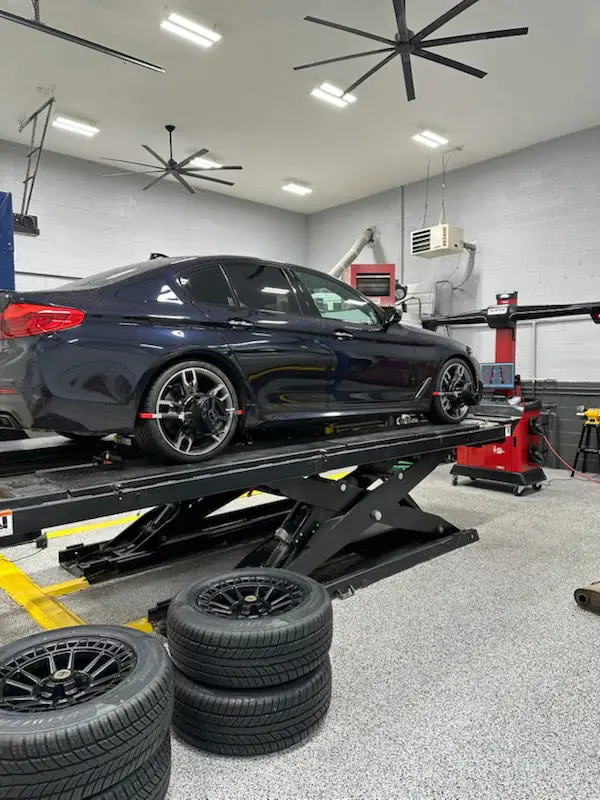
The estimate comes the same business day from the bay on Germanna Highway in Locust Grove, which means the choice between pads only and pads with rotors is made with the findings in front of you. Customers have described the way an inspection comes back: a list with pictures of what needs attention, sent as a link to their email, instead of a verbal summary over the counter.
If the damage is part of an insurance claim, the shop works with insurance and handles the paperwork, so a brake repair after a collision does not turn into an afternoon on the phone.
The first week on new pads
New pads and rotors need a short bedding period before they deliver full stopping power. A common recommendation is to drive normally for the first stretch, avoid hard panic stops unless you truly need one, and avoid sitting at a light with your foot pressed hard on the pedal right after a fresh pad has been heated. That lets an even layer of friction material transfer onto the rotor face.
A little dust and a faint noise in the first days can be normal. A pull to one side, a grinding sound, or a pedal that feels different from the day you drove out is not, and it is worth a phone call to (540) 972-7090 rather than a wait-and-see.
Every brake job comes with a 1-year parts and labor warranty, so a problem that traces back to the repair gets handled instead of argued about.