The ride tells you about worn parts before the tires do
Worn shocks and struts show up as bounce. The car keeps moving after a dip, the nose dives hard when you brake, and the body leans more in a corner than it used to. Ball joints and tie rods fail differently: the steering starts to wander on the highway, you hear a clunk over a rough patch, or the wheel feels loose in your hands at low speed.
The slowest signal is the tires themselves. Wear that collects on the inside edge, patches that feel scalloped under your palm, or one tire wearing faster than its partner all point back at the parts holding the wheel in place. Country roads with their washboard and potholes are hard on all of it, and drivers around Locust Grove tend to notice the change gradually, one commute at a time, until a passenger mentions it.
Parts first, alignment second, on the Hunter rack
An alignment on worn parts does not hold. If a tie rod has play in it, setting the toe to spec only sets it to spec until the next bump shoves the loose joint somewhere else. So the sequence matters: suspension parts that are worn get replaced first, and the alignment comes after, when there is something solid to align.
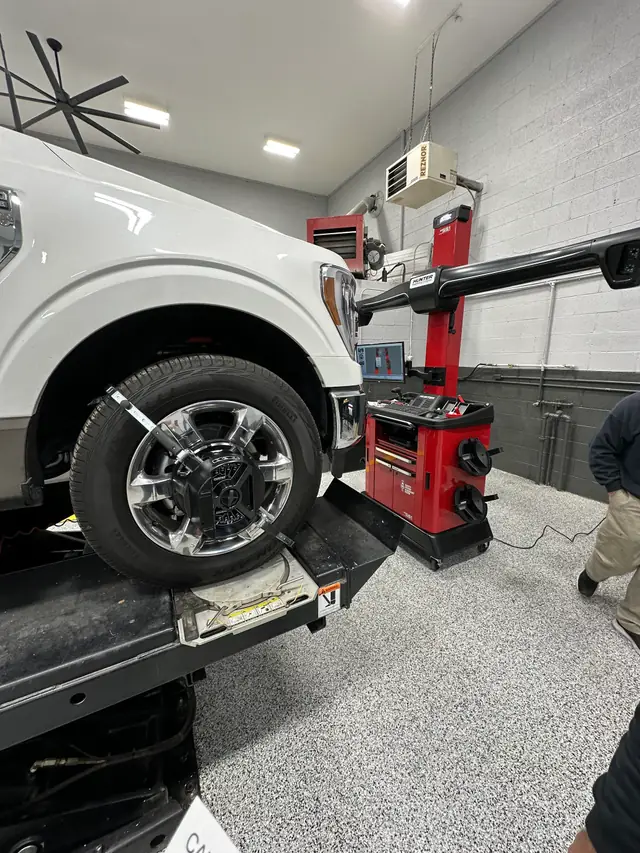
The Hunter alignment rack sits in the bay on Germanna Highway, and it shows up in the shop's own photos: a white F-150 with its front wheel clamped to the system and the red alignment tower beside it. The targets clamp to each wheel and the system reads camber, caster and toe, so the numbers on the screen tell you where the car actually points instead of where it feels like it points.
Four-wheel alignment is on the shop's service list, and the estimate for suspension work comes the same business day, so you know what the job involves before it begins.
Watching the tires once the repair is done
The best check after a suspension repair costs nothing. After the first few hundred miles, look across each front tire's tread from edge to edge, run your hand across it, and note whether the steering wheel sits straight on a flat road. Even wear and a centered wheel mean the repair is doing its job.
If the car pulls, the wheel sits off center, or a noise is still there, bring it back. Suspension work carries a 1-year parts and labor warranty, and a quick call to (540) 972-7090 gets the vehicle on the schedule. Tire rotation and balancing on the same visit are worth asking about, since tires that have been wearing unevenly benefit from a fresh start.